What Is a Coding Assistant, Really? — How Claude Code Actually Works
Most people think Claude Code is just a code generator. It's not. Here's how it actually works — explained with a shopping mall analogy and a Windows terminal
Claude, ChatGPT, Gemini.
Most people use these as smart chat assistants. Ask a question, get an answer. Summarize a document, generate some text.
They're great at that. But they have one hard limit.
One File Is Fine. What About 100?
Let's say you run an online store.
You have 100 Excel files in a folder — one for each month of sales data over the past few years.
You want this:
"Go through every file in my sales folder,
 read all of them,
 and give me a full summary report."
ChatGPT can't do that. Claude can't do that.
Not because they're not smart enough. Because they can only see what you hand them directly. They can't go browsing through your computer on their own.
Claude Code Is Different
Tools like Claude Code and OpenAI's Codex are a different category.
Browse your folders autonomously
Read the files it needs
Process your instructions
Save the result exactly where you want it
Not just on your PC — it can deliver results to a server too.
The shift: from a smart advisor that tells you what to do → to an assistant that actually does it.
It sounds like a tool only developers would use. The name "coding assistant" doesn't help. But the capability goes way beyond writing code.
I was always curious how this worked under the hood.
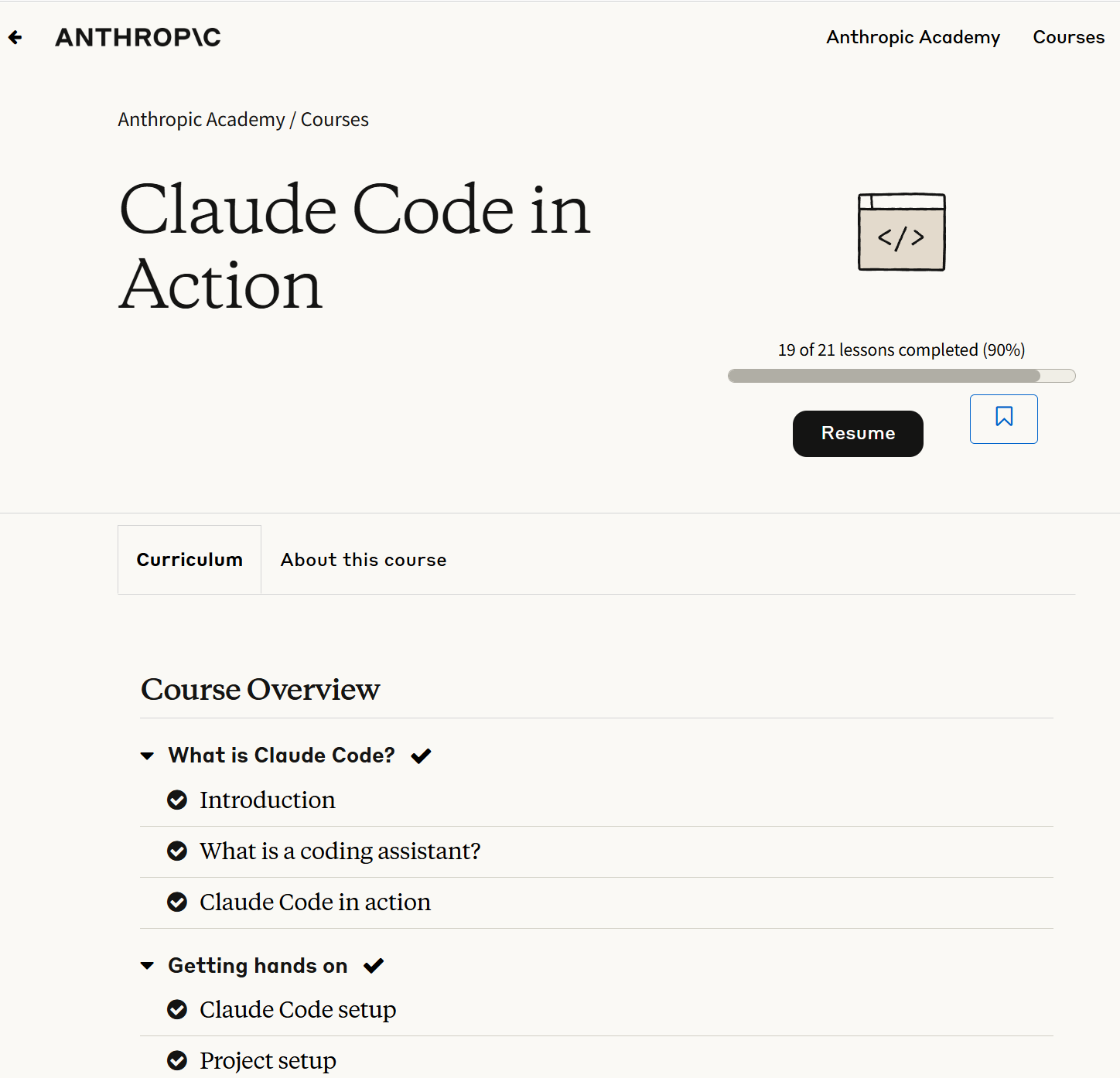
Then I found out Anthropic offers a free official course.
Course: Claude Code in Action
URL:    https://anthropic.skilljar.com/claude-code-in-action
Price:  Free (just need a Skilljar account)
Bonus:  Official Anthropic certificate on completion
Going through it, I finally understood the structure. Here's what I learned.
The Truth About Claude Code — It's Not That Smart
Claude Code is an app that runs in your terminal.
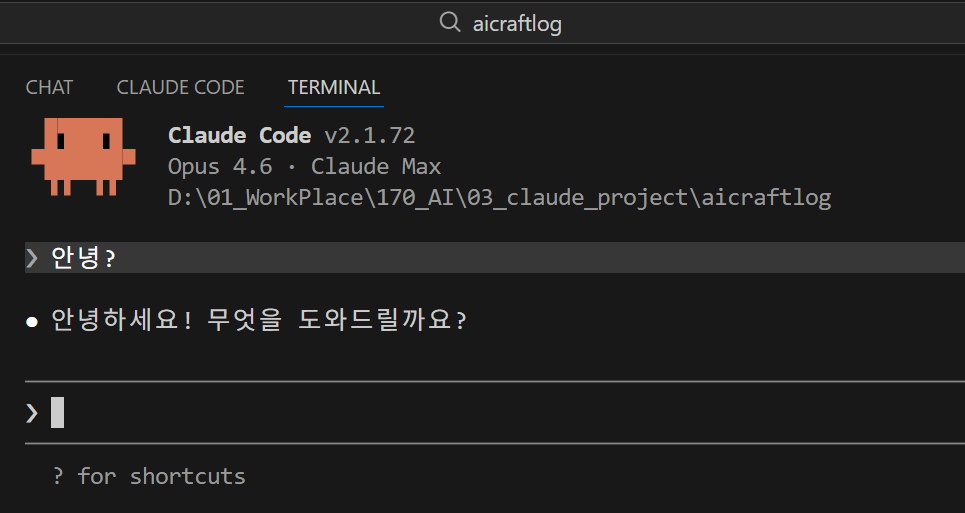
And honestly? The app itself isn't that intelligent.
Here's what actually happens when you give it a task:
You give a command
    ↓
Claude Code passes it to Claude (the AI model)
    ↓
Claude says "I need more data — get me that file"
    ↓
Claude Code finds the file, reads it, hands it over
    ↓
Claude analyzes it and decides what to do next
    ↓
Claude Code writes the result as an actual file on your machine
Claude Code is basically Claude's assistant.
The brain is Claude. Claude Code is the one that physically moves around your computer doing whatever the brain asks.
So How Does Claude Code Actually Read Files?
This is where the key concept comes in: Tools.
Open a Windows terminal and type mkdir test_folder.
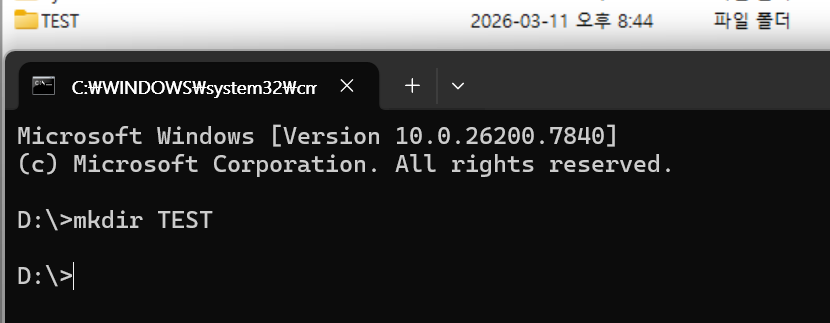
A new folder appears. Here's what's really happening:
cmd.exe receives the mkdir command
    ↓
Passes "test_folder" as a parameter to Windows OS
    ↓
OS creates the folder
cmd.exe is the program that takes your command and tells the OS what to do.
Tools work exactly the same way.
Anthropic built a set of these "command handlers" and baked them into Claude Code:
Read   → Access the file system and read a file
Write  → Access the file system and create a file
Edit   → Access the file system and modify a file
Bash   → Execute a terminal command
Fetch  → Make an HTTP request over the network
That's why Claude Code can open an Excel file, a Word doc, a log file — whatever it needs.
Claude Code = an app that bundles Claude (the brain) with Tools (the hands and feet)
Claude Solves Problems Like a Human
Once Claude Code hands over the data, Claude works through the problem in a loop — just like a developer would.
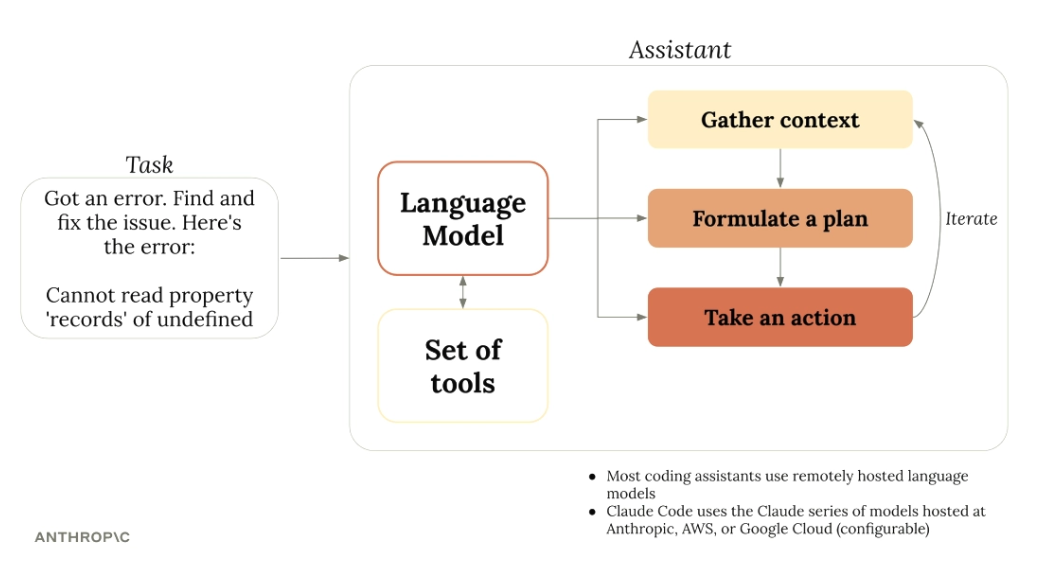
Step 1 — Gather context
-
What's in these files?
-
Where is this data coming from?
-
What's the overall structure here?
Step 2 — Formulate a plan
-
What's the best way to handle this?
-
Are there edge cases?
-
What format should the result be in?
Step 3 — Take action
-
Ask Claude Code to read or modify files
-
Check the result
-
If it's not right, go back to Step 1
One pass is rarely enough. It iterates. That's exactly how a senior developer works.
The Real Picture
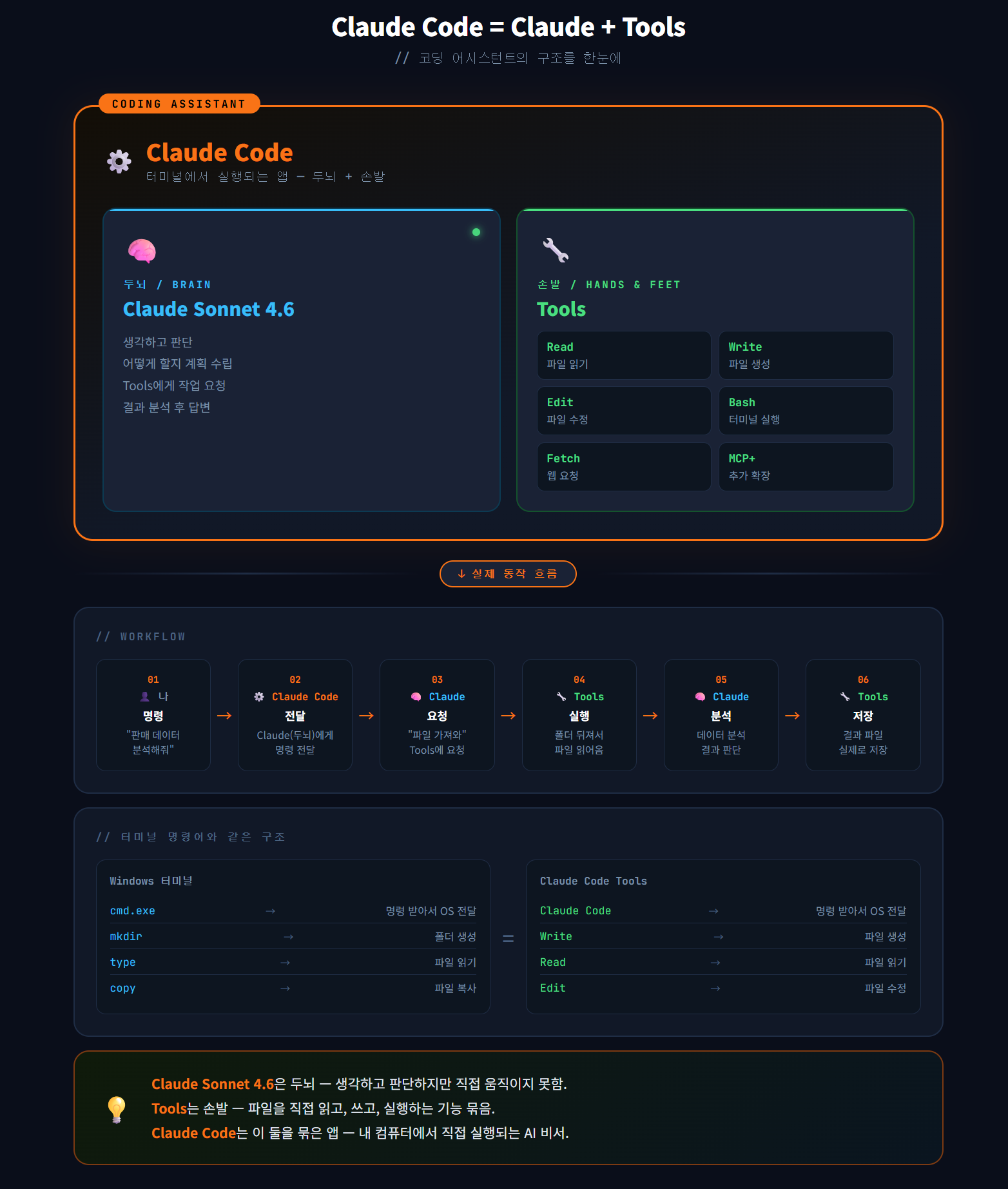
Claude      = Brain (reasoning, planning, analysis)
Tools       = Hands and feet (file read/write/execute)
Claude Code = The app that connects brain to machine
Claude decides what needs to happen. Claude Code makes it happen on your actual computer.
"Coding assistant" is an undersell. A more accurate description:
An execution layer that digs through your computer, feeds data to an AI, and turns the AI's output into real files.
This post is based on Anthropic's official free course "Claude Code in Action." Course link: https://anthropic.skilljar.com/claude-code-in-action
Related Posts
Stay Updated
Get notified when I publish new posts. No spam, unsubscribe anytime.